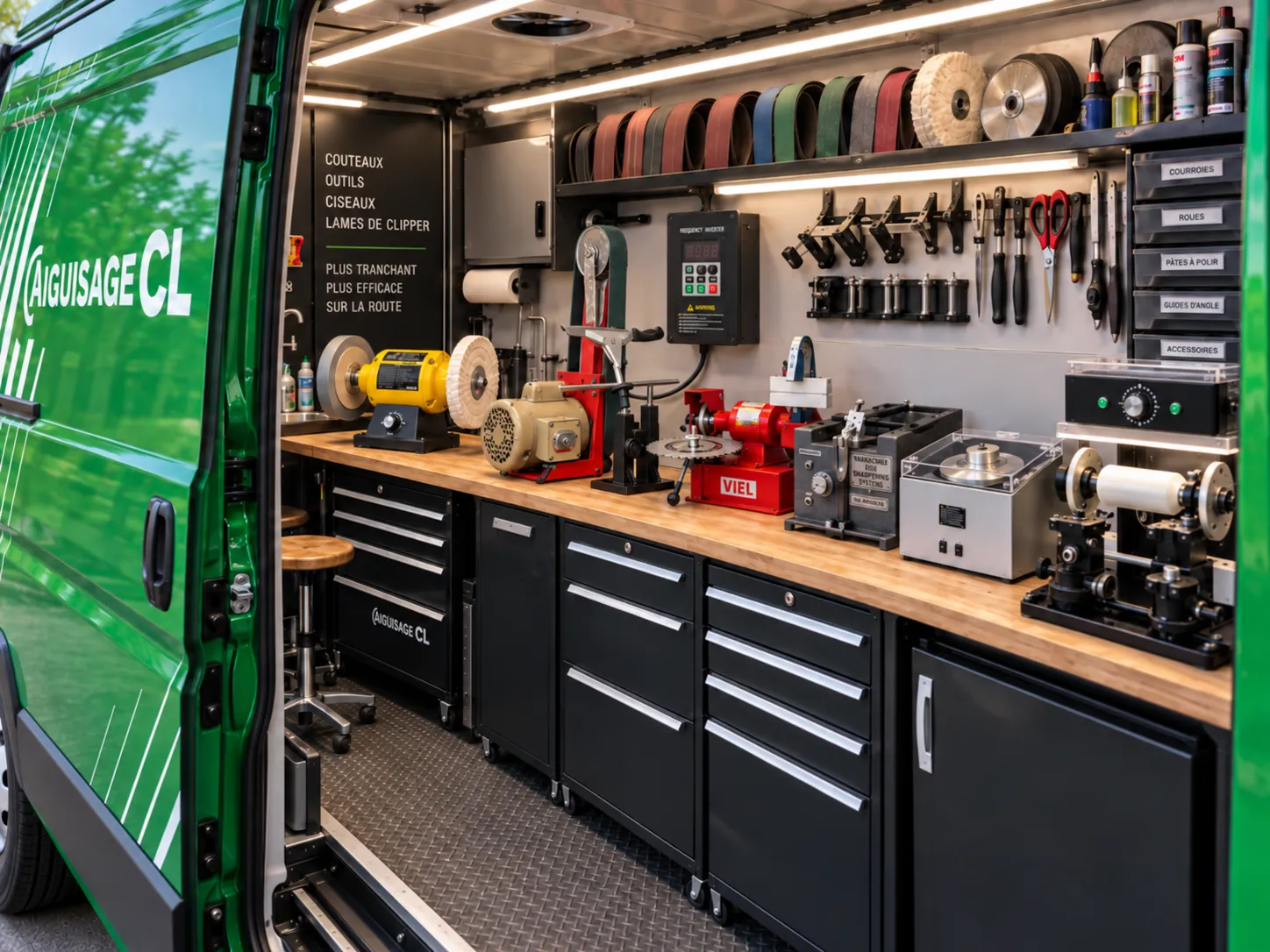
A quick sharpening and a good one look the same on day one. Three months later they look nothing alike. Here is what we do differently, starting with the part nobody else in Quebec uses.
Angle jigs on every machine
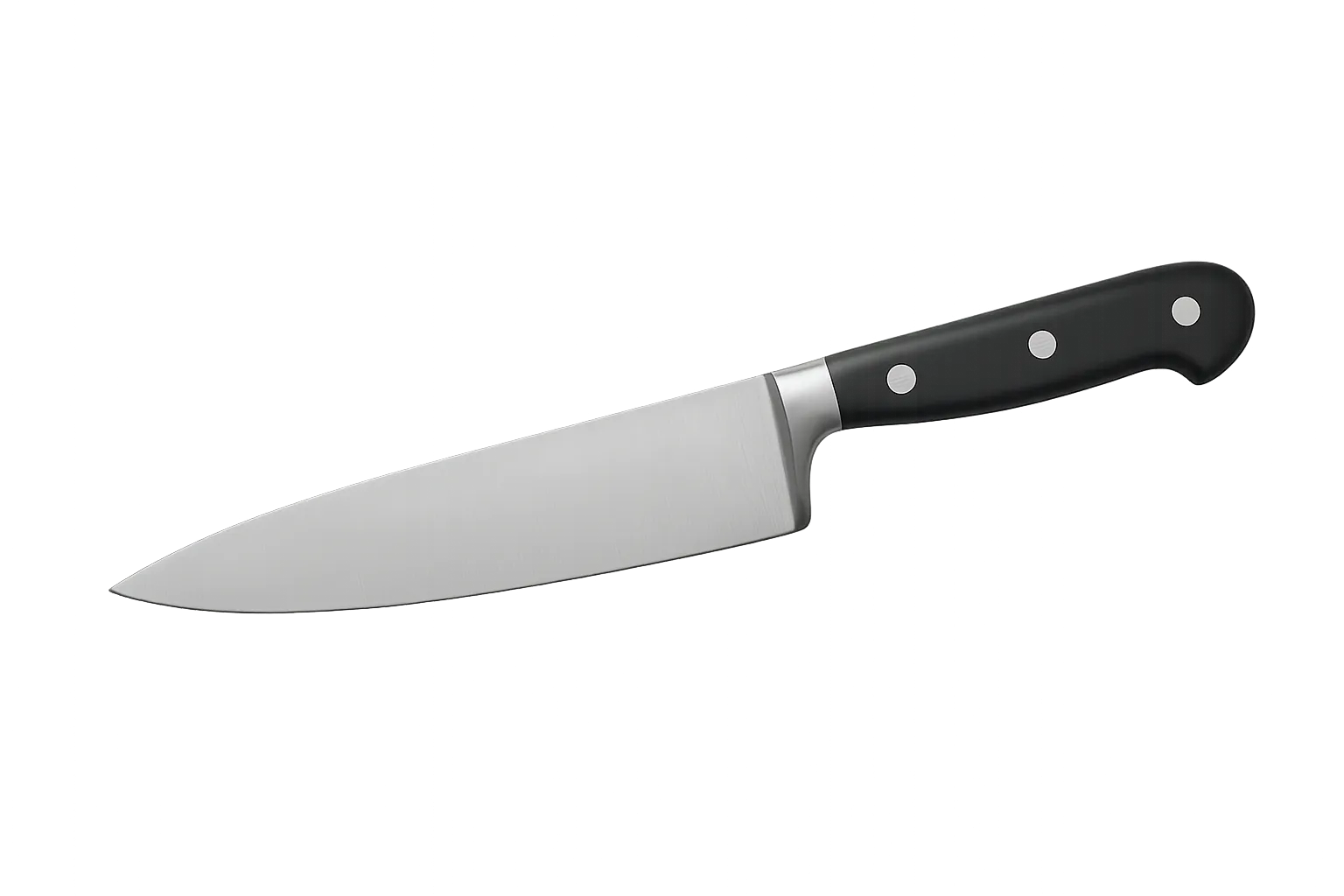
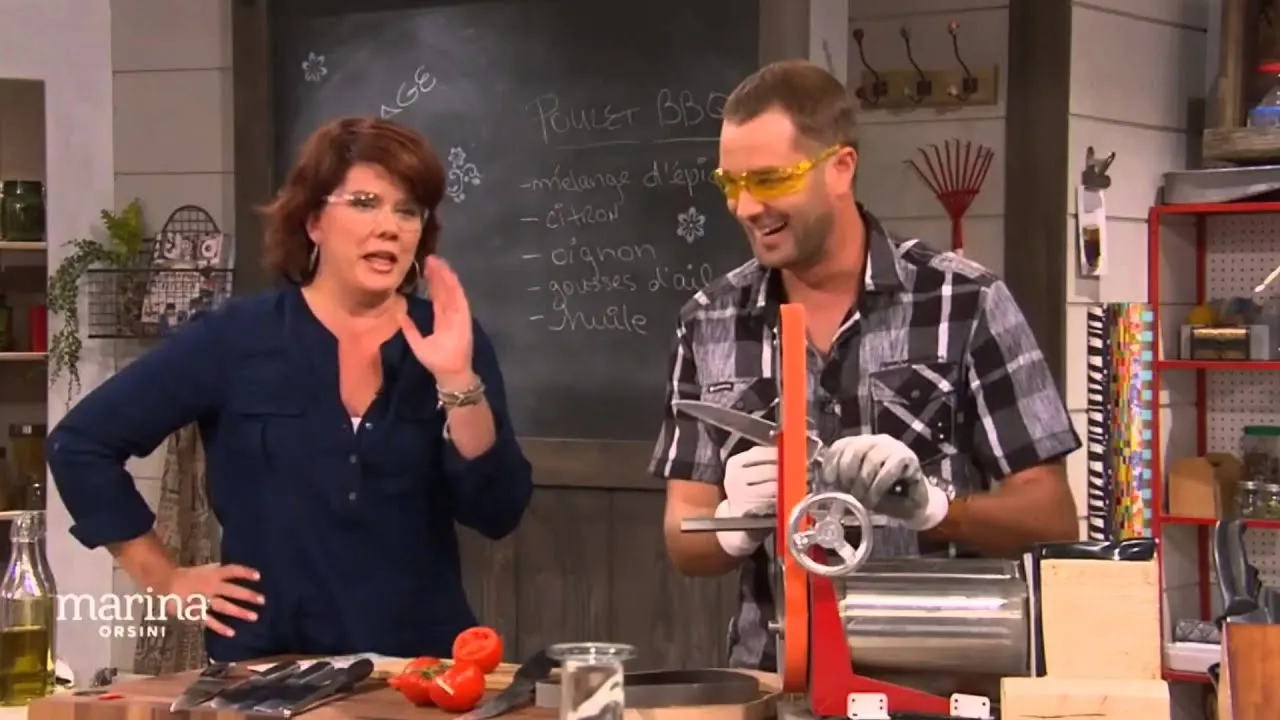
Our machines carry jigs matched to the knife: Japanese, German, chef, boning, filleting, bread, hunting. That is what lets us reproduce the exact angle instead of eyeballing it freehand. A Henckels sharpened at your place this morning and the same Henckels across town two hours later leave with the same angle. The result does not depend on which technician shows up.
Two stages, and never below 1,200 grit
Standard sharpening runs two stages and two belt changes, finishing at 1,200 grit. No knife leaves one of our trucks below that.
The mirror finish, and when it pays for itself
Sharpening raises a burr along the edge. A third stage, on a leather strop with polishing compound, removes far more of it and refines the edge to roughly 8,000 to 10,000 grit. The edge is not only finer, it is more stable, so the knife stays sharp much longer. The harder the steel, the better it holds that edge. Simple rule if you do not know what your knives are made of: past the hundred-dollar mark, it is worth it.
Serrated knives, one tooth at a time
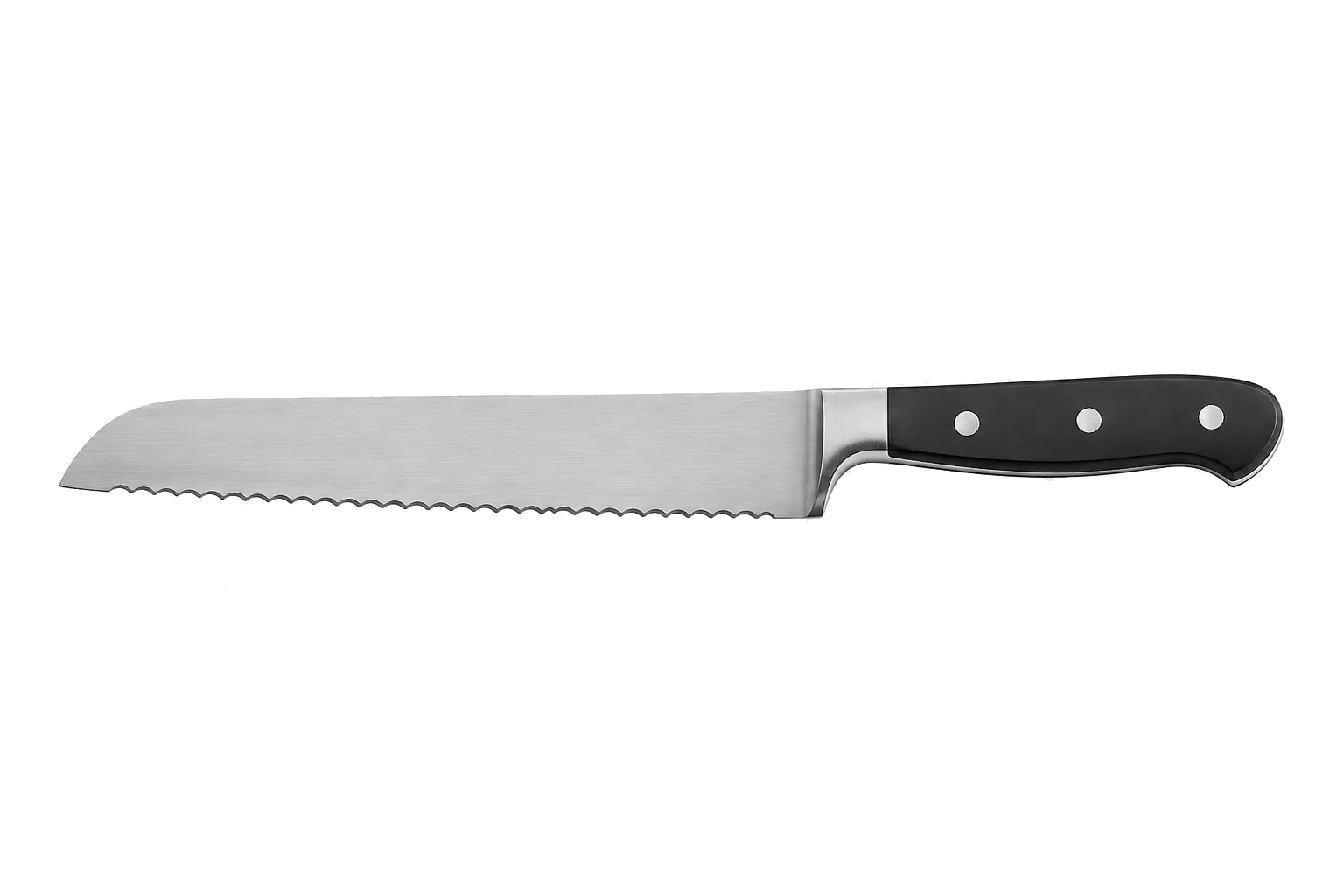
The usual shortcut is to run the flat side, opposite the teeth, in a single pass. That produces an edge, but it works around the serrations instead of sharpening them. We take each tooth separately, by hand, on adjustable jigs built for the different serration profiles and angles, against a disc turning very slowly. It takes far longer. It is also the only way to keep the original geometry of a bread or steak knife.
We grind slow and cold
Our machines are variable-speed and we run them low. A blade that overheats loses its temper, and steel that has lost its temper will not hold an edge again, no matter who sharpens it next. That is the one kind of damage sharpening cannot undo.
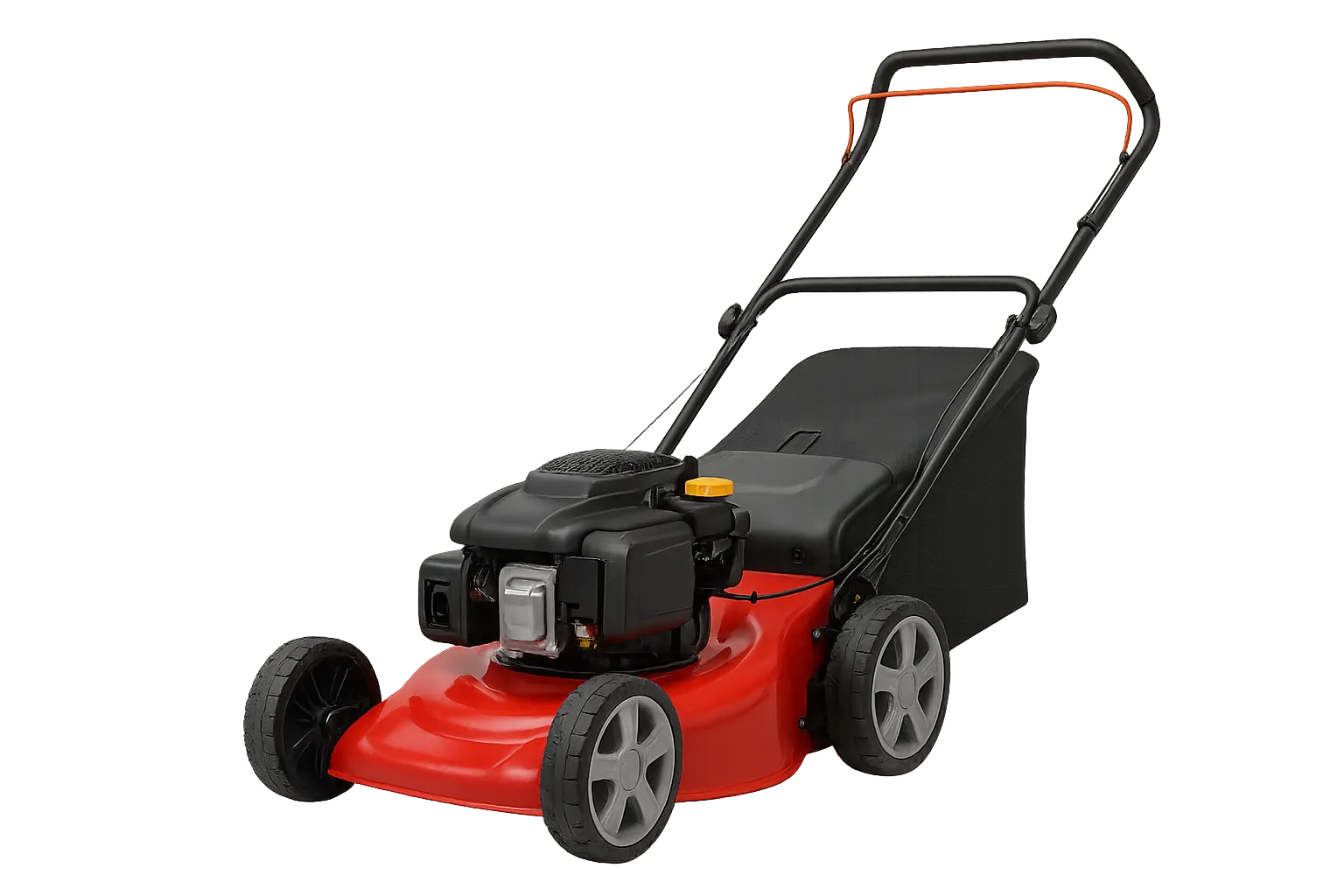
On mower blades, you remove nothing
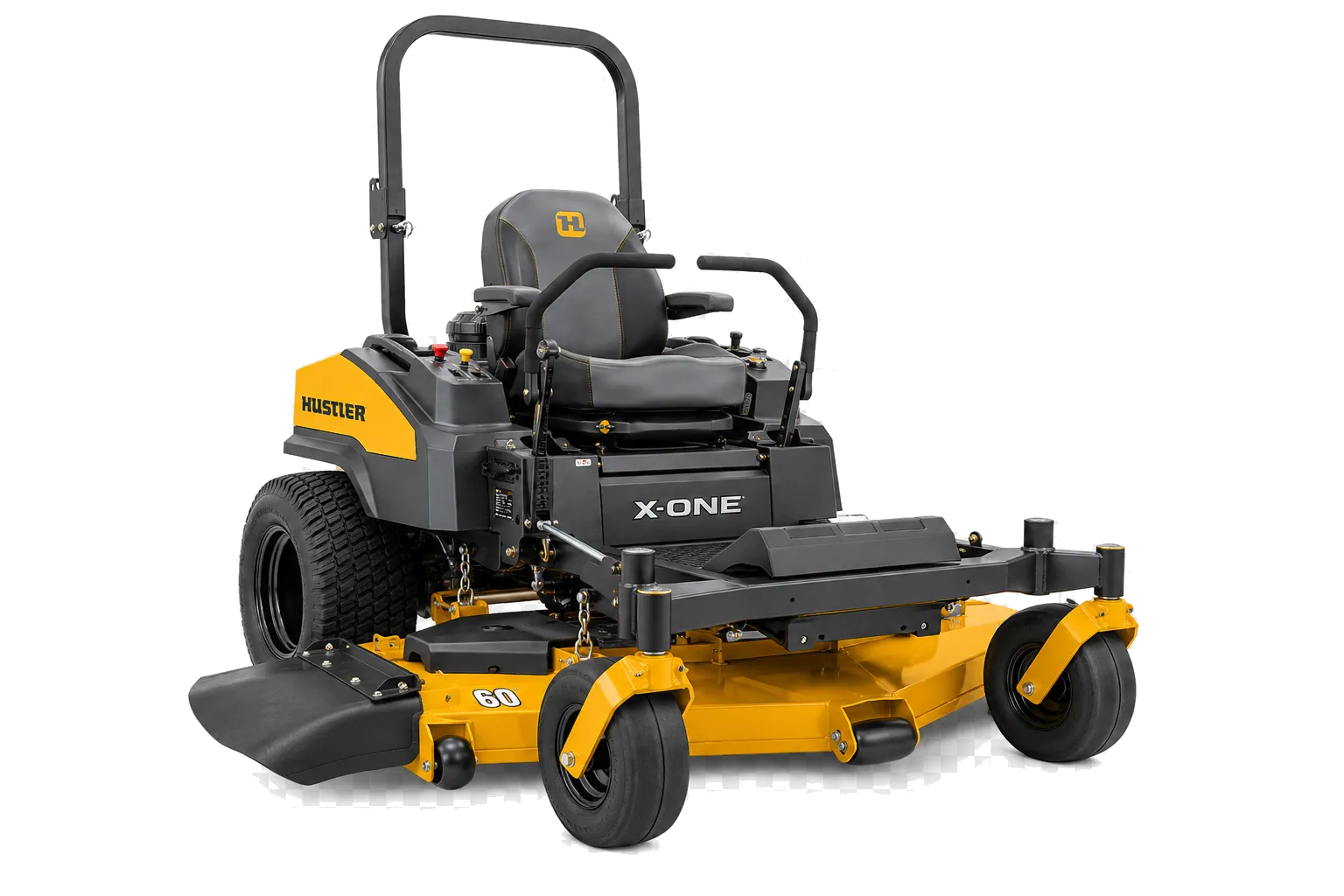
We take the blade off, sharpen it, balance it and put it back. An unbalanced blade shakes the engine and wears it out; a dull one tears the grass instead of cutting it, and the lawn browns at the tips.